Renting an aerial work platform (AWP) should make your work safer, faster, and more efficient, but only if you choose the right machine and avoid the common pitfalls many renters face. With the ARA Show 2026 approaching, it’s the perfect time to visit some of these mistakes and see how DINOlift’s product line offers solutions.
The ARA Show remains the rental industry’s central hub for learning, networking, and hands‑on equipment evaluation. This year it runs March 1-4, 2026, at the Orange County Convention Center in Orlando. As you explore new technologies and rental strategies, keep these key mistakes in mind to ensure you’re renting the right lift for the job.
1. Not Matching the Lift to the Jobsite Conditions
One of the most common rental errors is choosing a lift based only on height while overlooking terrain, space constraints, and indoor vs. outdoor requirements.
For example, a scissor lift may offer the right height but struggle on uneven ground. Conversely, a rough‑terrain boom lift may be unnecessary (and more expensive) for indoor work.
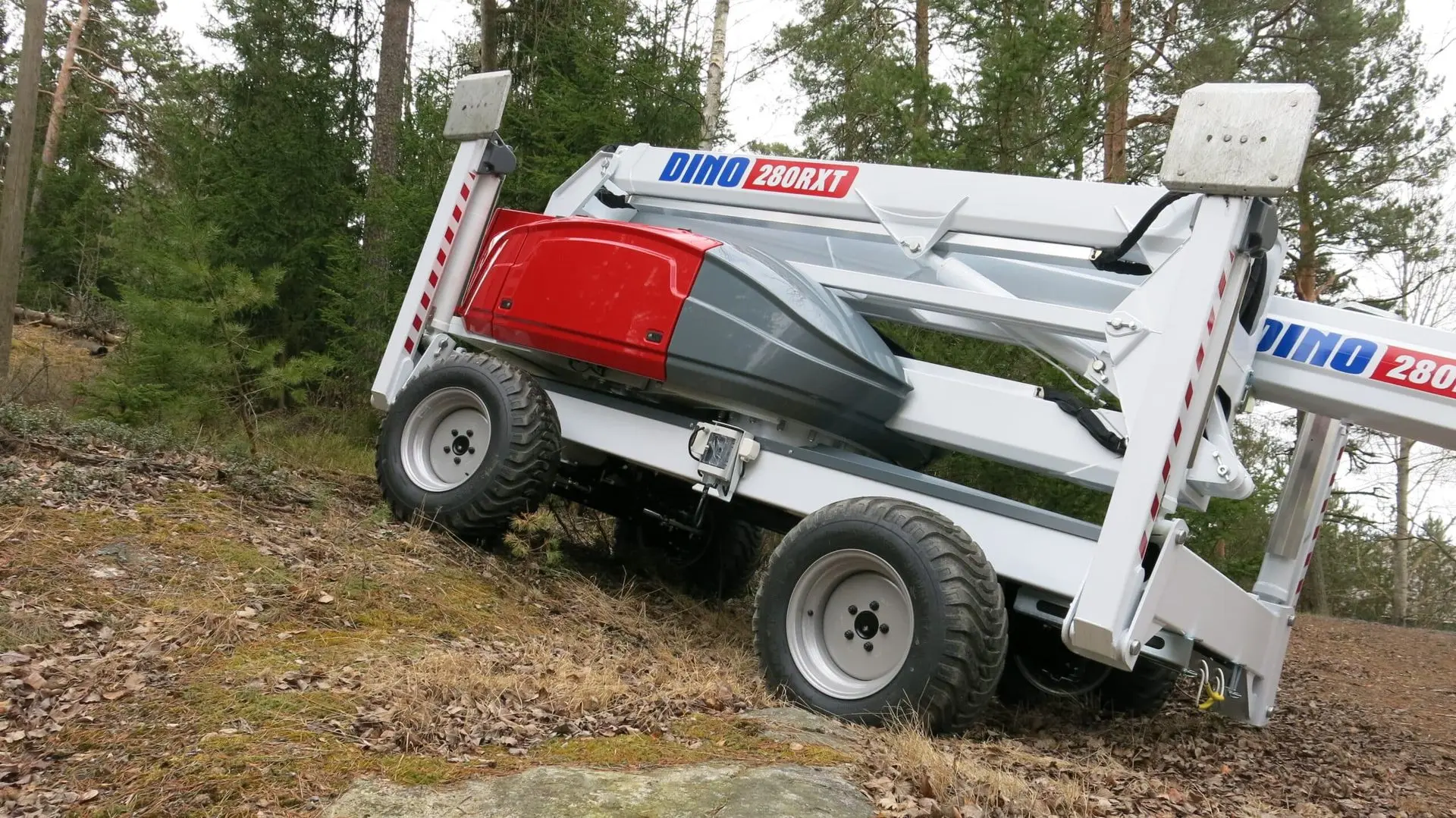
DINOlift’s lightweight, compact units excel in situations such as:
- Working on soft lawns, including the turf tire option for the RXT series
- Maneuvering in tight urban or residential spaces
Checking ground conditions, slope, and available maneuvering space before renting will prevent costly mismatches. With a gradability rating of 40%, the DINO RXT Series can handle slopes about to just over 20 degrees.
2. Underestimating Required Working Height and Outreach
Another frequent mistake is confusing platform height with working height, or overlooking horizontal outreach.
A job that requires reaching over obstacles may demand an articulated boom lift rather than a vertical-mast or scissor lift. Choosing a model with inadequate reach can lead to delays, forced repositioning, or even unsafe work practices.
3. Forgetting About Transport Requirements
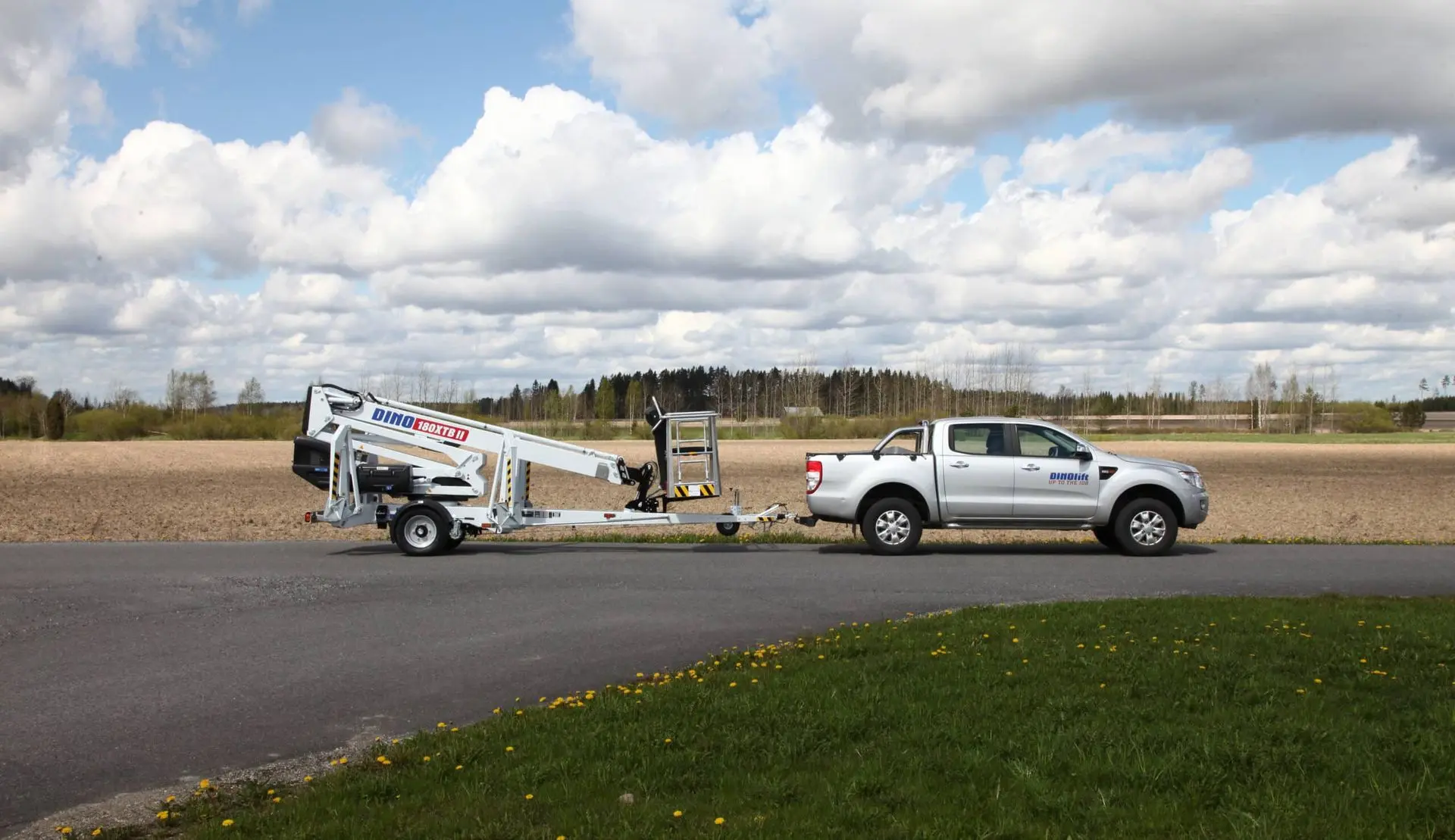
Towable boom lifts are popular because they can be hauled by a standard pickup, but many renters underestimate:
- Tow rating requirements
- Hitch size
- Brake controller needs
- Total trailer weight
This mistake can lead to late starts, additional fees, or even safety violations.
DINOlift’s towable models are known for their exceptionally low overall weight, with the DINO 52XTII coming in at under 4,400 lbs. This significantly increases the number of vehicles capable of towing them and simplifies logistics for renters. Still, transport planning should never be an afterthought.
4. Ignoring Setup Space and Stabilization Needs
Every aerial lift requires proper stabilization, whether through outriggers, leveling systems, or wheel chocks. Choosing a machine without confirming its setup footprint can slow the job to a stop or create unsafe working conditions in a hurry.
Compact lifts like DINOlift use narrow outrigger spreads, letting them squeeze into spots where big booms tap out. That’s why peeking at the setup diagram before you rent isn’t just smart, but your secret weapon for making sure the lift actually fits where you need it
5. Skipping Operator Training and Familiarization
Most renters assume “a lift is a lift,” and that’s exactly how people end up pushing the wrong button, fighting controls they’ve never seen before, or wasting half the day trying to figure out why the boom won’t move. Towables, tracked lifts, and self‑propelled booms can feel totally different from one another, and those differences matter — a lot.
That’s why taking five minutes to skim the manual isn’t just a good idea; it’s the fastest way to avoid rookie mistakes. Modern lifts come loaded with safety systems, automatic leveling, platform controls, emergency functions, and transport settings that aren’t always intuitive if you’ve never been in that machine before.
And don’t forget:
online walk‑through videos are your best friend.
DINOlift offers guidance videos that can assist you from starting the machine for the first time, to the emergency retraction of outriggers.
6. Overlooking Indoor vs. Outdoor Power Considerations
Indoor jobs require electric power to avoid fumes and noise. Outdoor jobs may demand diesel power for torque and runtime. Renting the wrong power type can cause operational delays, ventilation concerns, or energy limitations.
Compact, electric DINOlift units shine indoors, while their larger booms handle exterior work effectively when terrain and reach requirements increase.
7. Not Planning for Delivery, Pickup, or Multi-Day Use
Many renters underestimate time windows for delivery, pickup, or the possibility that weather could delay work, extending rental periods unexpectedly.
Clear scheduling and transparent communication with the rental provider prevents unexpected charges and downtime.
(photo of dino on truck)
Final Thoughts: Avoid the Guesswork
Avoiding these common mistakes comes down to planning, education, and choosing equipment that fits the jobsite and not just the height requirement.
Renting an aerial lift shouldn’t feel like a guessing game. A little planning, a quick look at the manual, and choosing gear that fits your workspace (not just your height requirement) can save you a world of headaches. The more you know upfront, the more confident and efficient you’ll be once the lift leaves the ground. We hope to see you at ARA at the DINOlift Booth #5059!